Deep dives into sovereign AI, autonomous agents, and systems engineering.

Everyone loves a free tier. Until they don’t. You build your workflow around it, tune your prompts to its quirks, and depend on its specific behaviors. Then the rate limits hit, credit limits exhaust, and the fallback tier kicks in—overnight, your 128k context model is stripped down to a 4k toy. Most organizations experimenting with AI right now are hitting a version of this exact wall without knowing it. Leadership watches a slick prototype, assumes it's production-ready, and slashes teams under the illusion that the demo scales. They write a system prompt, watch it work in a controlled test, and then wonder why it drifts in production. They tune the prompt, tweak the wording, and hire consultants—unaware that the instruction is losing a direct fight against the model's underlying training defaults. There is a massive distance between what AI does in a controlled demonstration and what it delivers under real, unvarnished conditions. The promise of unlimited, low-cost intelligence is a illusion built on borrowed compute. When you rely entirely on someone else’s infrastructure, you don't own the AI—you're just renting temporary access on their terms, right up until the paywall hits or the server overloads. The only way forward isn't blind reliance on cloud magic or rigid adherence to local hardware, but a pragmatic hybrid strategy that expects the bubble to burst at any moment.
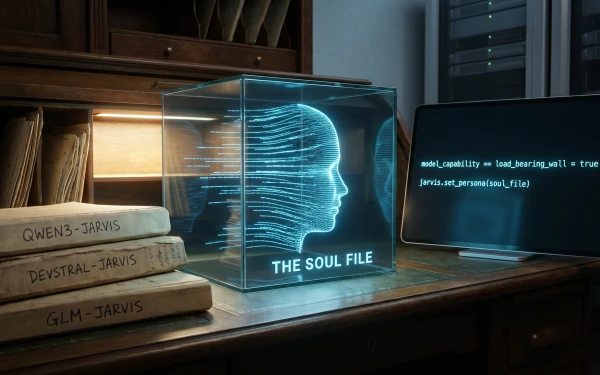
I wrote a document telling JARVIS who it was supposed to be. Dry wit. Concise. Slightly butler-ish. The kind of assistant that doesn't open every response with motivational energy and a smile emoji.

Most businesses are missing a critical capability. Not a developer, not a prompt engineer, something newer, and far more valuable. Here's what to look for.
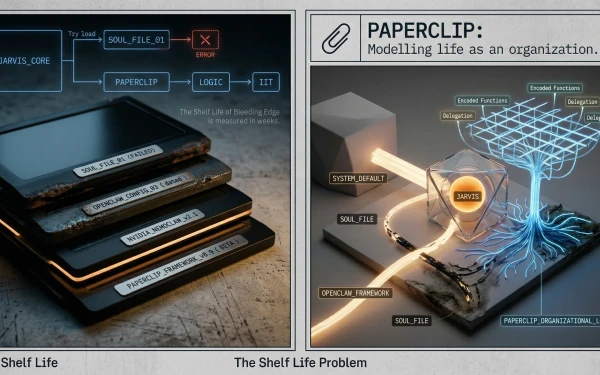
The soul file didn't take. JARVIS still works — just not the way I imagined. And while I was figuring that out, the industry moved on without waiting for me.
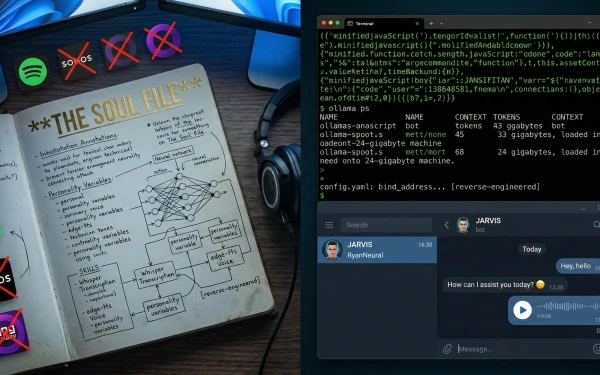
I said no to the Mac mini. A week later I was unboxing one. The hardware wasn't the problem — the default configuration assuming you want a generic assistant was.

I found a hard drive that had never been used. Not lost. Just forgotten. What happened next reminded me exactly what JARVIS is supposed to be for.
Discover why I built JARVIS, a private on-prem AI agent designed as a thought partner, not a magic 8 ball. Explore personality-matched agents and data sovereignty.
